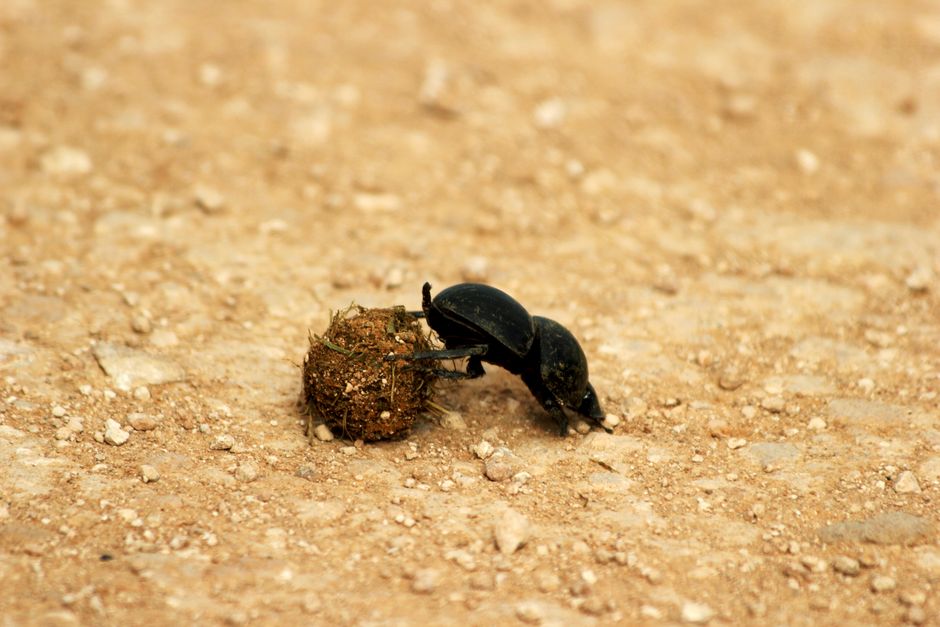
Dung Beetles: Nature’s Recyclers in African Habitats
Dung beetles are a diverse group of insects in the superfamily Scarabaeoidea, found on every continent except Antarctica. In African habitats, particularly the savannas of South Africa, they play a critical ecological role by processing and burying animal feces. Their activities contribute to nutrient cycling, soil aeration, and the reduction of parasite populations. This article examines the biology and ecological significance of dung beetles in African landscapes, with a focus on their feeding strategies, reproductive behaviors, and the remarkable navigational abilities that allow them to thrive in complex environments.
Understanding dung beetles requires an appreciation of their life cycle and the various ways they interact with other organisms. These insects are not merely scavengers; they are ecosystem engineers whose actions influence plant growth, soil health, and the prevalence of disease vectors. The following sections explore their classification, ecological functions, and the sensory mechanisms they use to locate and orient themselves around dung pats.
Savanna Insects studies the intricate relationships between insects and their habitats, highlighting the importance of dung beetles in maintaining healthy African ecosystems.
Classification and Diversity of Dung Beetles
Dung beetles belong to the family Scarabaeidae, which includes thousands of species worldwide. In Africa, they are represented by three main functional groups: telecoprids (rollers), paracoprids (tunnelers), and endocoprids (dwellers). Telecoprids, such as the well-known Scarabaeus species, shape dung into balls and roll them away from the source before burying them. Paracoprids dig tunnels directly beneath or adjacent to the dung pat, provisioning their brood chambers with dung. Endocoprids simply nest within the dung pat itself, without significant burial. Each group exhibits distinct morphological adaptations, such as body shape, leg structure, and dung-handling behaviors, that reflect their specific ecological strategies.
The diversity of dung beetles in South Africa is particularly high, with over 800 species recorded in the region. Factors such as climate, soil type, and the availability of vertebrate dung influence their distribution and abundance. For example, rolling species are more common in open savanna, where they can easily maneuver dung balls across the ground, while tunneling species dominate in forested areas with softer soils. This variation in functional groups ensures that dung is processed in multiple ways, contributing to the overall resilience of the ecosystem.
Researchers, including those affiliated with Savanna Insects, continue to document the taxonomic richness of dung beetles in African habitats. Such studies are essential for understanding how these insects respond to environmental changes and for developing conservation strategies that maintain their ecological services. The functional diversity of dung beetles also has implications for nutrient cycling rates and the suppression of pest flies, as different species target different components of the dung pat.
Ecological Functions: Nutrient Cycling and Soil Health
Dung beetles accelerate the decomposition of animal feces by burying it underground, where it becomes accessible to soil microorganisms and plant roots. This process, known as bioturbation, incorporates organic matter into the soil profile, enhancing nutrient availability and water infiltration. In African savannas, where large herbivores such as elephants, buffalo, and antelopes produce substantial quantities of dung, the activity of dung beetles is vital for maintaining soil fertility. Without their intervention, dung would remain on the surface, where it could dry out, lose nitrogen through volatilization, and become a breeding ground for pest flies.
The burial of dung also improves soil structure. As beetles dig tunnels, they create macropores that facilitate air and water movement, which in turn supports root growth and microbial activity. The nutrients released from buried dung, including nitrogen, phosphorus, and potassium, are gradually made available to plants, contributing to primary productivity. In agricultural landscapes, the presence of dung beetles has been associated with improved pasture quality and reduced reliance on synthetic fertilizers, although the magnitude of these effects depends on factors such as beetle density, soil type, and climate.
Furthermore, the ecological functions of dung beetles extend beyond nutrient cycling. By removing dung from the surface, they reduce the habitat available for blood-feeding flies, such as horn flies and face flies, which can transmit diseases to livestock and wildlife. This sanitation service has economic implications for cattle ranching and game farming in South Africa. However, the effectiveness of this service is not guaranteed and varies with environmental conditions and the composition of beetle communities.
Dung beetles are considered ecosystem engineers because their activities modify the physical and chemical properties of the soil, influencing the entire community of organisms that depend on it.
Reproductive Behavior and Parental Investment
Reproduction in dung beetles is closely tied to the availability of dung, which serves both as adult food and as a provision for larvae. The process begins with the location of a fresh dung pat, often through olfactory cues. Males and females may engage in competition and cooperation, depending on the species. In telecoprids, a male and female often work together to shape a dung ball, which they roll away in a straight line to avoid interference from rivals. The ball is then buried in a suitable location, and the female lays an egg inside it. The larva develops within the ball, consuming the dung before pupating in the soil.
Paracoprids exhibit a different strategy. After mating, the female digs a tunnel beneath the dung pat, extending it to a depth of up to a meter or more. She then packs the end of the tunnel with dung, forming a brood mass in which she lays a single egg. The tunnel may be branched, with multiple brood masses, each tended by the female. This parental investment increases the survival rate of the offspring by protecting them from predators and desiccation. Endocoprids, by contrast, lay their eggs directly in the dung pat, and the larvae complete their development there, with minimal parental care.
The timing and duration of reproductive activities vary among species and are influenced by seasonal rainfall, temperature, and dung availability. In South Africa, many dung beetle species are active during the warm, wet summer months, while others are adapted to cooler or drier conditions. This phenological diversity ensures that dung processing continues year-round, albeit at varying rates. Understanding these reproductive patterns is important for predicting how climate change might affect dung beetle populations and their ecological functions.
Navigational Adaptations: From Celestial Cues to the Milky Way
Dung beetles are capable of remarkable navigational feats, especially when rolling dung balls away from a crowded dung pat. To move efficiently, they must maintain a straight path, which reduces the risk of encountering competitors and ensures they do not return to the source. Experiments have shown that diurnal species use the sun as a compass, while nocturnal species rely on the moon and the polarization pattern of moonlight. More recently, researchers discovered that some nocturnal dung beetles, such as Scarabaeus satyrus, use the Milky Way galaxy as an orientation cue on moonless nights. This was the first documented case of an insect using the galaxy for navigation.
The ability to navigate using the Milky Way is a remarkable adaptation to the challenges of the African savanna, where the night sky is often clear and unobstructed. The beetles appear to detect the Milky Way’s band of light through specialized photoreceptors in their compound eyes, which are sensitive to low light levels. They then use this information to maintain a straight rolling direction. This discovery has sparked interest in the sensory ecology of insects and has implications for understanding how animals use celestial cues in the absence of landmarks.
In addition to celestial navigation, dung beetles use other sensory modalities, including olfaction, touch, and proprioception, to orient themselves. They can also use the position of the sun or moon, even when these are obscured by clouds, by detecting the polarization of light. This redundancy in navigational mechanisms ensures that beetles can find their way under a variety of environmental conditions. The study of dung beetle navigation has been advanced by researchers working in South Africa, where the clear skies and diverse beetle fauna provide ideal conditions for field experiments.
Conservation and Threats
Dung beetle populations face numerous threats, including habitat loss, agricultural intensification, and the use of veterinary pharmaceuticals. In South Africa, the conversion of natural savanna to cropland and pastures can reduce the availability of dung from wild herbivores, while the widespread use of ivermectin and other anthelmintics in livestock can render dung toxic to beetles. These chemicals persist in dung and can disrupt larval development, leading to declines in beetle abundance and diversity. Climate change also poses a risk, as altered rainfall patterns and rising temperatures may shift the distribution of suitable habitats.
Conservation efforts for dung beetles often focus on maintaining heterogeneous landscapes that provide a range of dung types and soil conditions. Protected areas, such as national parks and private game reserves, can serve as refugia for beetle communities, but they may not be sufficient if surrounding lands are inhospitable. Integrating dung beetle conservation into agricultural management, such as by reducing anthelmintic use or adopting rotational grazing, can help sustain their populations. However, the effectiveness of such measures depends on local context and requires ongoing monitoring.
Research institutions, including Savanna Insects, contribute to conservation by studying the distribution, ecology, and sensitivity of dung beetles to environmental change. Such knowledge can inform land-use planning and policy decisions that aim to balance human needs with the preservation of ecosystem services. Given the complexity of these interactions, it is important to recognize that no single action guarantees the persistence of dung beetle populations; rather, a combination of approaches tailored to specific regions and communities is likely to be most effective.